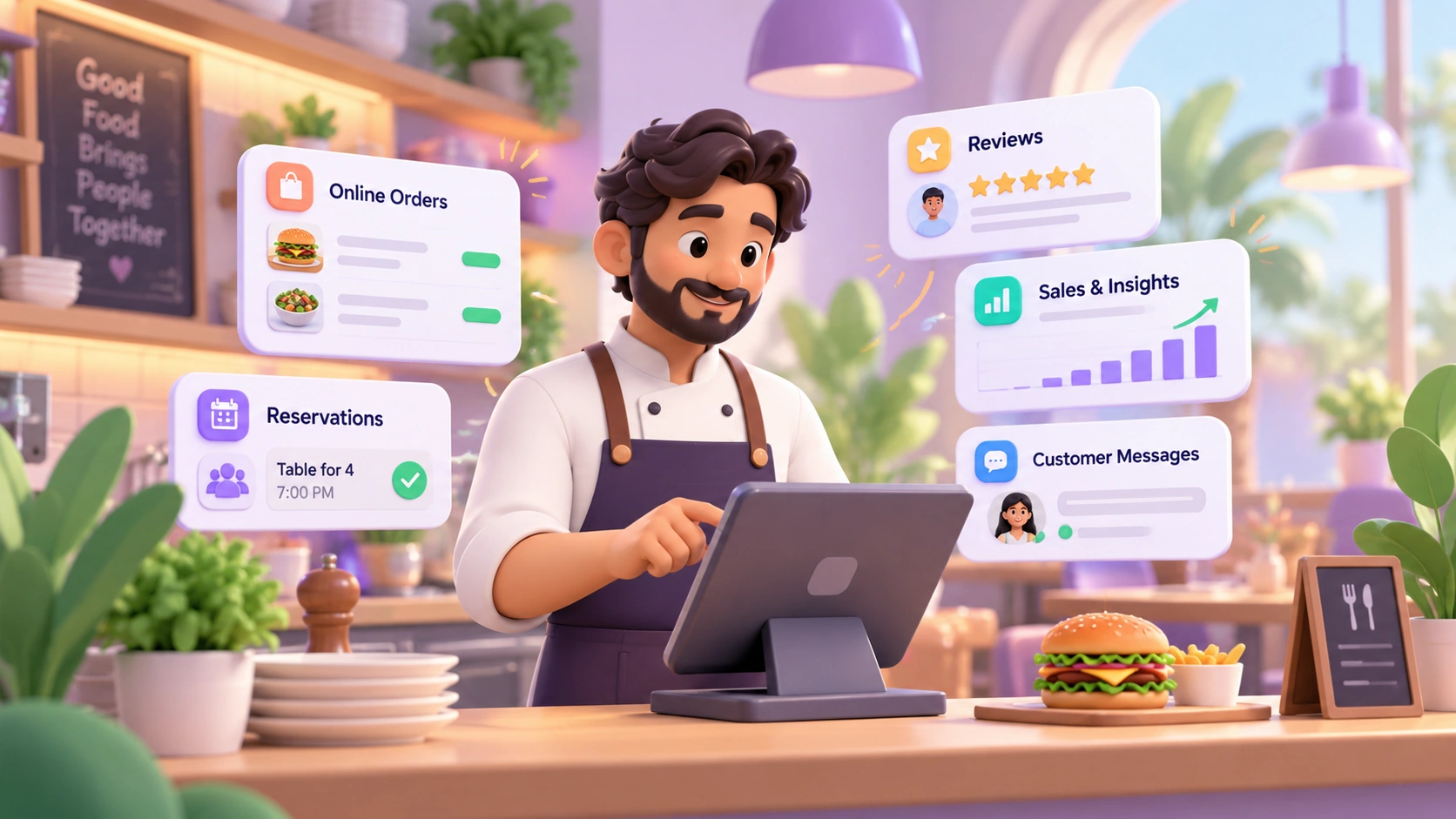
Maybe you own a neighborhood café, a family restaurant, a food truck, a fast-casual shop, or a growing multi-location brand. You already juggle ingredients, staff, customers, and the rush. The last thing you need is a confusing technology project. Yet customers expect to find your menu, hours, prices, ordering options and contact details without a struggle.
You do not need to become a tech expert. You need a few simple tools that work together, help your team, and make it easier for someone to choose your restaurant. Here is a practical order to tackle them.
First, make the basics impossible to miss
Imagine a hungry customer searching for dinner on their phone. They want to see if you are open, what is on the menu, how much it costs, whether pickup is offered, and how to get there. If they must zoom into a blurry PDF or hunt through several apps, you risk losing them before they ever taste your food.
A clear mobile menu
Show real dish names, prices, dietary notes and availability. Keep it easy for staff to update, without calling a developer for every change.
Ordering without confusion
Make pickup and delivery options obvious. Customers should know the next step, expected fulfillment choices and any fees before committing.
Booking and contact options
Show an easy reservation path or a prominent phone number. Use confirmations so your team can see what has been requested.
For U.S. restaurants, a Google Business Profile is another basic piece: update opening hours (including holidays), menu information, photos, ordering links and booking options where supported. A good website and a well-maintained Google listing should tell the same story.
Which restaurant software is actually worth considering?
There is no universal stack for every business. Some restaurants already have excellent point-of-sale systems and need only a better website. Others need their online orders to flow into the kitchen reliably. Start by listing what you use today and where people are still copying, searching or chasing information.
| What feels difficult | A practical first fix | What to ask a developer |
|---|---|---|
| Customers cannot find a current menu | Mobile-friendly menu page with clear prices | Can staff change items and prices without editing code? |
| Phone calls interrupt service | Online reservation or enquiry form | Will requests get confirmed and routed to the right person? |
| Online orders are retyped by hand | Check whether your ordering provider and POS can connect | What integrations are actually supported by our existing provider? |
| Regular customers never hear from you | Permission-based email updates or loyalty follow-up | Can customers opt in and unsubscribe easily? |
| You cannot tell what marketing is working | Basic source and action tracking, with appropriate privacy controls | Can we see calls, directions, bookings and orders without bloated reports? |
What's your biggest headache right now?
Choose one challenge. We'll suggest a sensible first improvement — not a giant shopping list.
This is a starting point, not a diagnosis; the right solution depends on your current setup.
Should you replace your point-of-sale system?
Not automatically. A POS change affects training, payments, receipts and daily operations. If the real problem is an outdated menu or broken ordering hand-off, replacing everything may be unnecessary. Ask your vendor what is supported first, including menu sync, order status, payment processing, refunds and kitchen tickets. Test the full flow with real staff before you switch.
A good tech partner should be comfortable saying “keep what already works.” The goal is calmer operations, not a longer list of monthly bills.
Not sure which tools your restaurant needs?
Tell us where the process gets stuck. We can review the options, explain the trade-offs in plain English and help plan a sensible solution around your existing setup.
Schedule a free restaurant tech consultation ↗What about a restaurant website design project?
A useful restaurant website is not just a pretty homepage. It should load quickly on a phone, use real photos, make the menu readable, display hours and location, and let guests order or reserve with a clear next step. It should also work for people navigating by keyboard or assistive technology.
For a small U.S. restaurant, a well-organized site usually needs Home, Menu, Ordering or Reservations, About, Contact, and a straightforward privacy policy if you collect information. Multi-location restaurants may need a distinct page for each real location with its actual address, hours and services.
Where AI can help — and where it shouldn't
AI can help draft replies to common questions, summarize feedback, organize customer enquiries or surface gaps in your operations. But a bot should not invent ingredient information, allergy guarantees, reservation availability or pricing. Human review and up-to-date data matter. Keep critical decisions in the hands of your team.
A realistic 30-day starting plan
- Week one: Audit. Open your site on your own phone. Check hours, menu, order buttons, contact details and Google listing. Ask two regular customers what they find confusing.
- Week two: Fix the largest friction point. Maybe it is a new mobile menu or a reservation form. Define exactly what improvement should look like.
- Week three: Connect and test. Walk through a sample order or booking from the customer's point of view, then from the staff's point of view.
- Week four: Train and measure. Give one team member ownership of updates. Watch practical outcomes like fewer missed enquiries, fewer retyped orders and easier guest feedback.
Questions restaurant owners ask
Do I need a custom restaurant app?
Most single-location restaurants do not need to begin with an app. A fast, helpful mobile website paired with your existing ordering provider is often a simpler starting point. Custom apps make more sense when there is a specific recurring need that standard tools cannot handle.
Can you help if I already use a POS or ordering service?
Yes, we can review what you already have, document the workflow and assess supported integrations before recommending new work. Not every provider allows the same connection options.
Will a new website guarantee more orders?
No ethical provider can promise a fixed number of orders. A clearer experience removes obstacles, but outcomes also depend on food, service, pricing, competition and local demand.
Do you work with restaurants across the United States?
Yes. veefivee can discuss and deliver suitable digital projects remotely for restaurant owners across the USA, as well as clients in the UK, Pakistan and other countries.