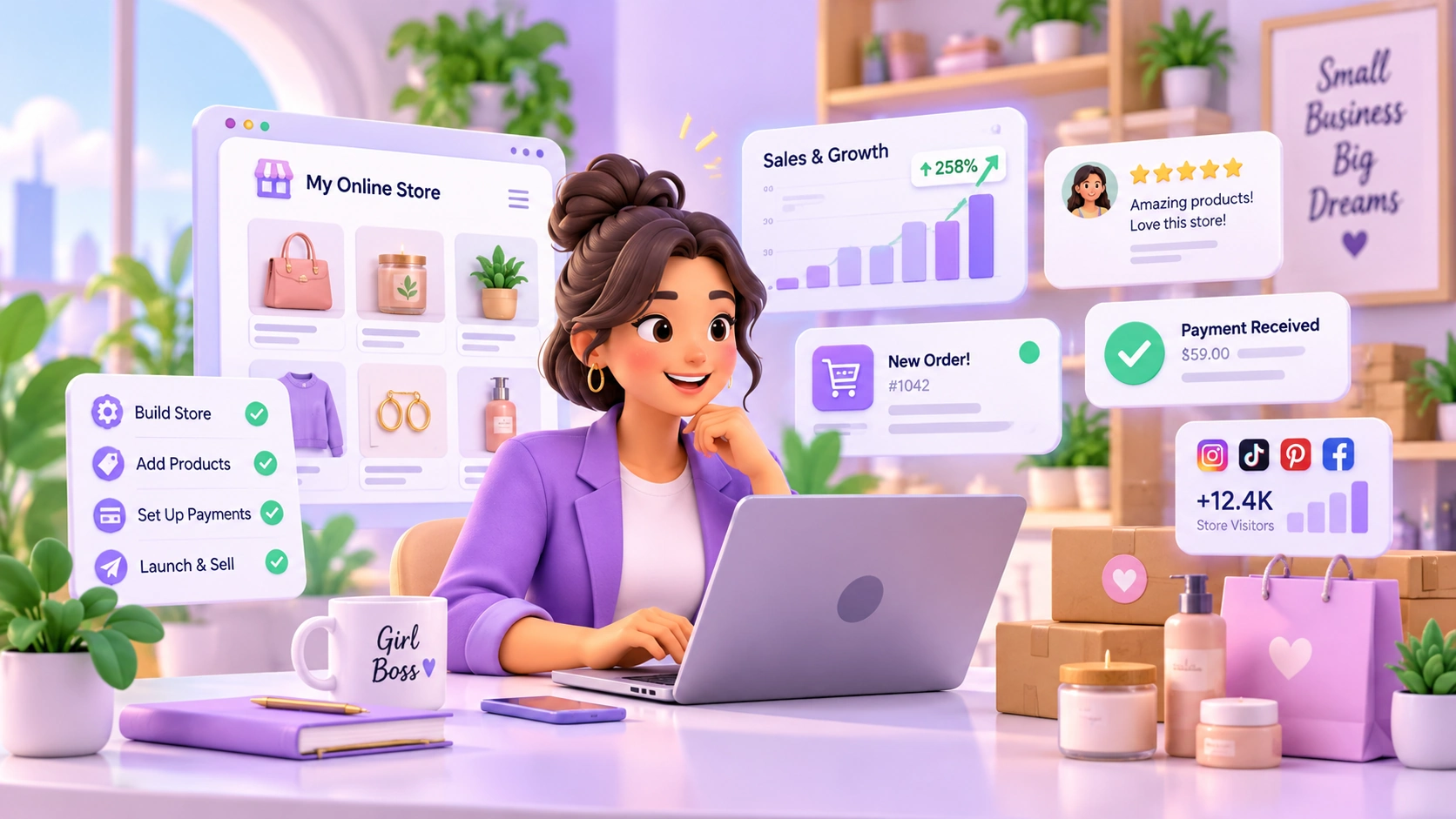
Maybe you already sell handmade jewelry through Instagram messages. Maybe you've built a little candle or skincare brand, have a closet full of curated vintage clothing, or make gifts that your friends keep asking to buy. Your customers love what you make — but the ordering process is a lot of messages, screenshots and back-and-forth.
And maybe every time you think about launching a real online store, you wonder: Do I need Shopify? How do I upload my products? What about payments, shipping, and making it look beautiful?
Here is the reassuring part: you don't need to figure out every technical detail before you start. A good online shop can begin with a manageable product collection and a clear, simple buying experience. This guide is especially for women building product businesses in the United States — and for anyone who wants their products to be easy to discover and purchase.
First: what does an online store actually do?
Think of it as your own little shop, open for browsing even when you're busy making products, shipping packages or spending time away from your phone. Instead of telling people to “DM me for the price,” your website can show photos, prices, sizes or colors, stock availability and delivery details in one place.
🛍️ A beautiful product display
Customers see clear photos, descriptions, options and prices without having to ask you the basics.
💳 An actual checkout
Buyers can pay through the methods enabled by your chosen store and payment provider, with a transparent total.
📦 Orders you can manage
You see what sold, which orders need packing and what you need to restock, all in one place.
💜 Your brand, your home
Your colors, personality, story, policies and product collections finally live somewhere you control.
🚚 Clear shipping options
Show delivery or pickup choices and shipping costs clearly before customers place an order.
✨ Easy product collections
Group gifts, best sellers and new arrivals so visitors can find what they love.
Should I use Shopify, Etsy, or a custom website?
They are different ways to sell, and there is no need to turn this into a complicated decision. Shopify is a hosted e-commerce platform designed to run an online storefront: products, checkout, orders and many common shop management tasks. Etsy is a marketplace where shoppers already browse many independent sellers. A custom shop can make sense for unusual buying experiences or specific integrations, but often isn't necessary for your first launch.
| Option | Why people choose it | What to consider |
|---|---|---|
| Shopify | Your own branded store, product management, checkout and room to grow. | Platform and app subscriptions, available features and how much you want to customize. |
| Etsy or another marketplace | A ready-made place where people are already shopping. | Marketplace fees, competition, policy rules and less control over the shopping experience. |
| Custom e-commerce website | A specific buying workflow or functionality not well supported by standard tools. | More design/development planning, maintenance and ongoing technical responsibility. |
For many first-time founders, Shopify is a practical place to start. You may also keep your marketplace or social audience while building a branded website. The best approach depends on your product type, budget and how you want to sell.
Let's imagine your first product listing ✨
Play with a product name, price and category. Your sample listing updates right here — no signup, no data saved, and no coding required.
A real store would also include your actual product photos, descriptions, variants, inventory and shipping details.
“Okay, but can I upload my products myself?”
Absolutely — that's one of the main reasons to use a store platform with an easy-to-manage dashboard. In a typical Shopify setup, you can add or edit products in an admin area rather than ask a developer to rewrite the website each time. We can help organize that area so you feel comfortable managing it.
A basic product listing usually includes the name, price, description, photos and availability. You may also set up choices such as color, scent or size, and group products into collections like “New arrivals,” “Gift ideas,” or “Best sellers.” Some advanced requirements depend on your platform and plan.
1. Upload photos
Use bright-but-natural, sharp photos showing the real product, plus details such as materials or packaging where useful.
2. Tell its story
Write what the product is, who it's for, what makes it useful and key details a buyer needs to decide.
3. Set the buying choices
Add prices, sizes, colors, variants and inventory where applicable, then preview the listing on a phone.
4. Publish and improve
Make the item available, review its checkout experience, then update photos and descriptions when needed.
5. Preview on your phone
Check that photos, options and the buying button all feel easy to use on a small screen.
6. Learn from your shoppers
Answer real customer questions and use their feedback to improve each product page.
A helpful idea: launch with your best 5–15 products rather than waiting until a huge catalog is perfect. There is no universal magic number; a manageable first collection simply makes photos, descriptions and testing less overwhelming.
Your online store can be easier than you think.
We can help choose the platform, design your storefront, prepare collections, set up the buying journey and show you how to add products yourself. Start with a free conversation — no technical brief required.
Schedule my free online-store consultation ↗What about payments, shipping and taxes in the USA?
These are worth planning before your first sale, but you don't need to solve everything by yourself. Your store will need suitable payment processing, clear shipping or pickup options, and an understandable refund/return policy. The actual available payment services and their fees depend on your provider and business eligibility.
For sellers in the United States, sales tax rules can vary by state and by your business circumstances. The online platform may provide configuration tools, but it does not remove the need to understand your obligations. Check reliable state guidance or ask a qualified tax professional, especially if you ship across state lines. If you sell regulated goods, check product-specific rules too.
Make shipping costs and timing clear before checkout. When you're just starting, a small number of straightforward shipping choices may be easier to manage than complicated rules nobody understands.
How do I get customers to find my shop?
You've probably already heard about “SEO,” which simply means making it easier for search engines to understand what your pages offer. For an online shop, helpful product names, honest descriptions, organized categories, descriptive image text, a fast mobile experience and clear policies are good starting points.
If you already have a community on Instagram, TikTok or Pinterest, your online store can give that audience an easier place to browse and buy. Product posts, launch updates, behind-the-scenes content and useful answers can all help people discover your brand. No platform or agency can guarantee that a new store will make sales — you still need products customers want, clear pricing and trust.
How much does starting an online store cost?
Think in layers, not one mysterious number. Depending on what you choose, the budget can include a domain name, platform subscription, paid theme or apps, payment processing fees, photography, shipping materials and any design/setup assistance. You may also set aside money for marketing and ongoing product photography.
Shopify and other platforms change their plans and pricing, so check the official pricing page before committing. A good website partner should explain which items are recurring, what they are optional for, and how to avoid installing paid extras you don't need yet.
Your mini “ready to launch?” checklist
This isn't an exam — it's a friendly reminder of what makes a small online store ready for real customers. Tick what you already have sorted.
One step closer to opening day 🎀
0 of 6 steps ready — you are making progress!
The checklist is for planning only. Completing it does not certify your store, legal compliance or payment readiness.
What does working with veefivee look like?
- We listen first. Tell us what you sell, where your audience is and what currently feels frustrating.
- We simplify the choices. We'll help you consider Shopify or other suitable tools, the pages you actually need and the trade-offs.
- We build around your brand. The layout should be easy to use, reflect your personality and make your products the star.
- We teach you the everyday basics. We can explain how to manage product listings and what to check when an order comes in.
- We plan for what comes next. That could be a better catalog, marketing connections or new features — at a sensible pace.
We work remotely with entrepreneurs and small businesses across the United States, as well as the UK, Pakistan and worldwide. You can begin with your idea and the products you love. We'll help with the technical questions along the way.
Questions new online-store owners often ask
Can I sell on Shopify if I have never built a website?
Yes. Shopify is designed to help merchants manage storefronts and products without writing code for routine updates. Choosing your layout, organizing products, setting up payments and testing checkout still takes planning — and that is where assistance can help.
Can someone build my store and then let me upload products myself?
Yes. That's often an excellent setup. The goal is to give you a storefront you can maintain for normal catalog edits, with clear guidance about when technical help is genuinely useful.
Should I stop selling on Instagram or Etsy?
Not necessarily. Many shops use several channels. Your website can be the consistent destination for product information and checkout, while social accounts or marketplaces continue to introduce customers to your brand.
Can I start with only a handful of products?
Of course. A smaller, thoughtfully presented collection is a practical way to launch, learn and improve.
Will you guarantee sales once the website launches?
No honest agency can guarantee sales. We focus on an easier buying experience, trustworthy presentation and a practical store setup. Your products, pricing, audience and marketing still influence results.
Do you help women-owned online businesses across the USA?
Yes. We can discuss suitable online-store projects remotely with women founders and other small-business owners throughout the USA, and help plan a store aligned with your audience and goals.